Vendor Login | Customer Login
 
 
houzz interior design ideas

MSI iPad App

ipad
Complete access to all MSI products at your fingertips!

MSI Video Corner


It's a Tactile World

by MSIBLOG 9. May 2013 08:36

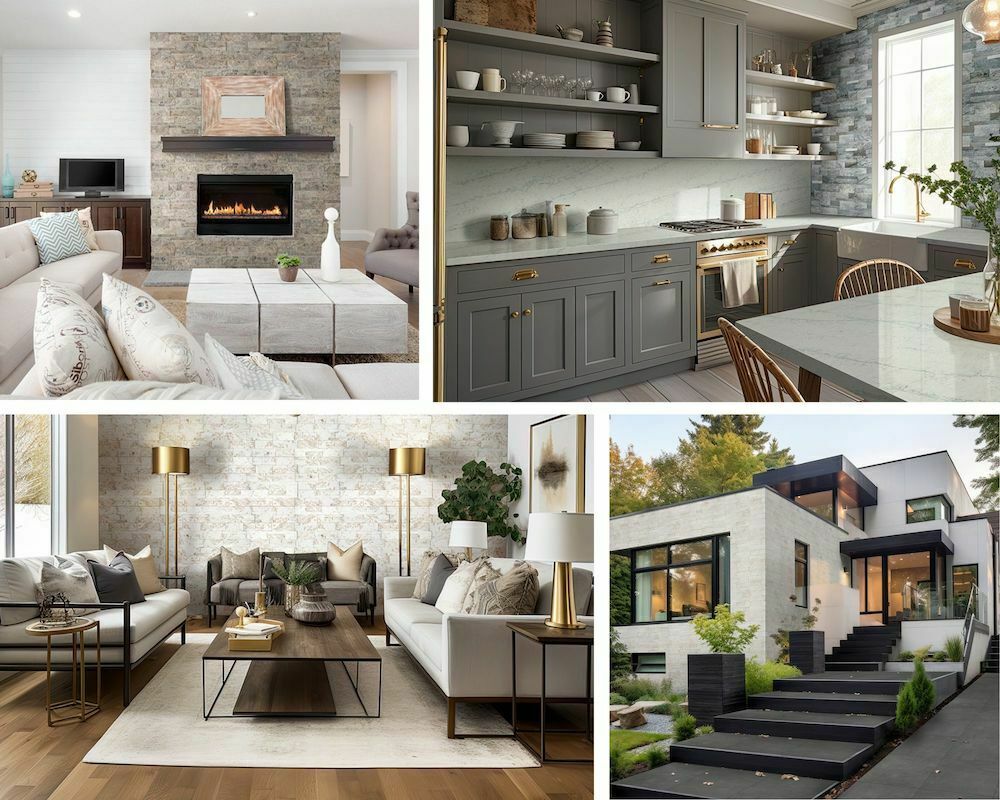
Are you tired of those boring flat walls in your home? Step into the new world of textured walls. They are not your usual faux finish or textured wall paper. It’s an evolution of tile! It’s a texture that you can actually touch and feel with your hands. There are so many ways to incorporate texture into a space with new options in glass mosaics, stone ledger panels, Splitface stones, and 3 dimensional effect tiles. Also, it is time to start thinking about wall tile in other rooms of the house besides just kitchens and baths. Think of older homes or an urban loft with a brick accent wall, tile can be used the same way but with many many more options. Take a look at these natural stones:


Giallo Fantasia Cobble Stone | Arctic White Ledger Panel

One of the key elements in designing a room can be incorporating texture. Think about wood grain, grass cloth, shag rugs, or seeded glass. All of these elements can help create visual interest that can make a space uniquely yours. One of the latest trends in tile is split face tile. Split Face stone is a technique applied to the stone that creates a highly textural look. Because of the rugged and uneven surface of the natural stone, it exposes crystal reflections that range in high and low lights that create dramatic random texture.


Mixed Travertine Splitface | Emperador Splitface | White Oak Splitface

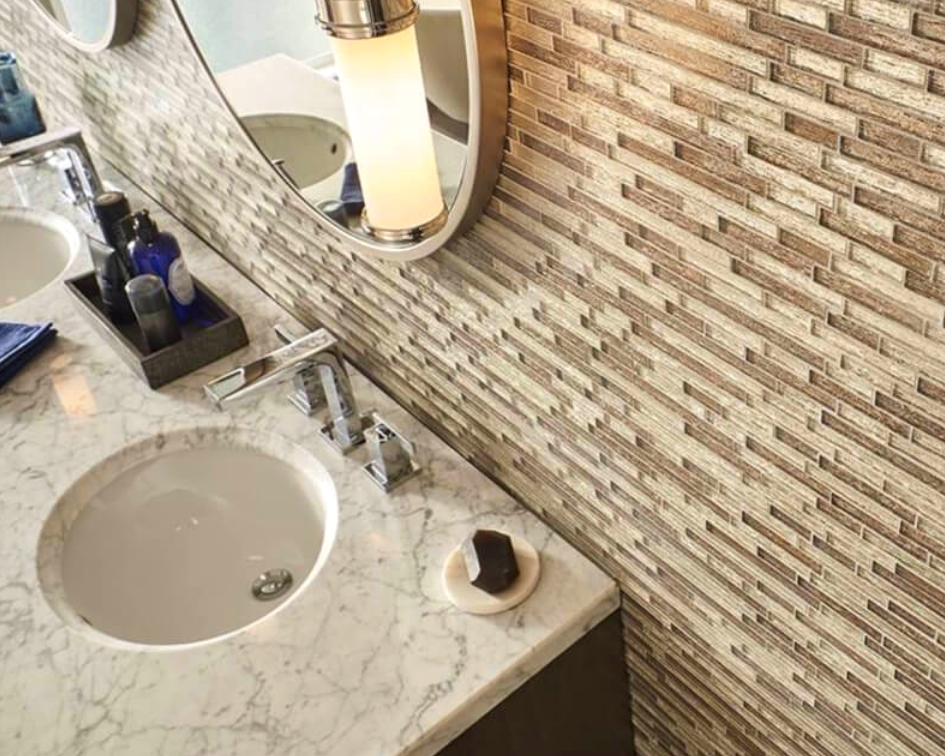
As you get more comfortable with mixing textures in a space try mixing different materials together. Don’t be boxed into the traditional combinations of tile where everything matches exactly. Mix glass with stone with metal. The combination can be amazing! Take a look at the bathroom below. We used Ledger panels in the bottom half of the room, almost like a traditional bead board, paired it with a large scale glass subway tile and striped in a great glass and metal mosaic tile to feature the mirrors. The combination possibilities are endless!


California Gold Ledger Panel | Manhattan Glass | Stone Wood Granite | 6x12 Subway Cinnamon Glass

Selecting Your Kitchen Countertop

by MSIBLOG 2. May 2013 12:35

4 Helpful Slab Selection Tools

If you’re working on a new build, kitchen remodel, or simply upgrading your old or outdated countertops to natural stone, choosing the right slab for your project may feel like a weighty decision – and it is! You will enjoy and use your countertops every day, and though the investment is certainly worth the end result, it isn’t one you will take lightly.

The process may feel overwhelming: selecting the type of stone (granite, marble, or other natural stone), the color, the movement and character of the right piece, and the finish that will fit your needs – there is certainly a lot to decide. Fortunately, MSI offers resources that will help simplify the slab selection process for you:

1.    The Kitchen Visualizer – Your first stop is to play with a variety of slab selections for natural stone and quartz countertops. The visualizer will help you to make the big decisions – including whether you are going light or dark with the countertops, and how that choice may affect other key choices like cabinets, floors, and mosaics. When you imagine a look that works for you, download, print or email your design(s).

2.    MSI Blog – Take some time to review past articles in the MSI blog. Learn more about the advantages of each type of stone and how it will fit with your lifestyle and theme, as well as find great information on how to address overall design. The blog below is an example of one of our many blogs that are specifically written to aid you in slab selection:

MSI Blog - Granite Countertops: The Workhorse of the Kitchen

3.    Website – MSI’s website offers an expansive selection of colors and patterns of granite slabs, marble slabs, travertine, onyx, limestone and more. When you find selections you enjoy, consider pinning them to Pinterest to create a board using MSI Products, another tool that will help you to refine your many choices before you visit a local Kitchen & Bath Dealer as well as allow feedback from others. 

4.    Homeowner Slab Selection Instructional Video – This video will take you through the selection process at an MSI showroom, including what to consider before you arrive and what you’ll need to bring with you to optimize the experience.

As you utilize all of your resources for slab selection, be sure to consider the following:

STONE – Every stone has its advantages and disadvantages. Some etch more easily; others are highly durable. Some are cool and ideal for bakers; others can tolerate hot pans and dishes with ease. Before visiting a showroom, investigate the different kinds of stone and what works best for your needs.

COLOR – You may not have narrowed your choices to one color before seeing slabs in person, however, it is essential to decide beforehand how your countertop will function in the overall scheme of your room. Will it be a contrast or an accent? Do you want your countertops to blend with other elements, or to downplay or highlight them?

MOVEMENT OR CHARACTER – Variance in the slab, such as the amount of veining, swirls, pebbles, or flecks, will also impact whether your countertop is a contrasting, complementary, or statement element in your room. Consider what part of the kitchen you want to stand out most, as that will factor into your ultimate selection.

FINISH – Highly polished, textured, matte, natural – there are several options when it comes to countertops. Edge profiles will go hand and hand with finish as well, as both finishes and edges can create an overall look, from old world to modern. Your fabricator can help you with these decisions, but knowing the overall desired look ahead of time will help you move quickly through the slab selection process.

When you have fully considered the above, it’s time for action! Find a Kitchen & Bath Dealer in your area. (Search online for smaller boutiques with natural stone samples or visit a larger store like Home Depot or Lowes). You will be introduced to a variety of natural stone selections. If you arrive prepared with several options in mind, it will help them to better partner with you. They may have small slab samples on hand, order ones they don’t have that are “must sees” on your list, or may even urge you to visit one of MSI’s 15 North American showroom facilities to hand pick a slab from full-size selections.

After making your selection, MSI will work directly with your fabricator for delivery of your stone. It may be a weighty decision, but selecting a natural stone slab that will enhance your home with beauty and function for years to come is as easy as a little preparation!

M S International does not sell directly to the public nor do we quote any prices.  As the largest natural stone importer and slab distributor in North America, MSI Stone offers slab selection showrooms in support of fabricator and retail partners.  The purchase of slabs must be prearranged through a kitchen and bath dealer prior to showroom arrival.   

The Progression of Kitchen Backsplashes

by MSIBLOG 15. April 2013 12:12

Like many design elements, a kitchen backsplash began as a functional element and evolved into an opportunity – an opportunity to add color, interest, and style in an otherwise practical space. 

THEN

The primary purpose and origin of a backsplash was to protect a wall adjacent to a sink, countertop, or behind an appliance.  A hard and durable tile protected drywall or plaster from splashes and moisture and prevented liquids from rolling down the wall. Moisture or splashes were prevented from seeping into the space between the vertical wall and the horizontal countertop, where they could collect behind the cabinetry. The addition of a backsplash and its corresponding line of grout provided a practical barrier between the wall and appliances that created moisture or generated splashes. 

Initially, a backsplash was composed of an extension of the chosen countertop material or of a row or several rows of tile. The color schemes were intended to blend in rather than to stand out, for a more monochromatic palette to make smaller kitchens feel larger.

NOW

Today, a backsplash is ever practical, still providing that same measure of protection. However, its usefulness far exceeds that of protecting a wall from grease, dirt, oil, smoke or food stains, as modern cleaning products make even a plain wall an easily wipe-able and washable surface. The main benefit of backsplash tile to a discerning designer is the look. 


Backsplash tile is a great opportunity to introduce color and contrast. This is particularly the case with contemporary materials, like mosaics, that incorporate both of these elements: a splash of interesting color in the form of glass, stone, or metal mosaic tile that provides contrast to the smooth surface of a granite countertop. 

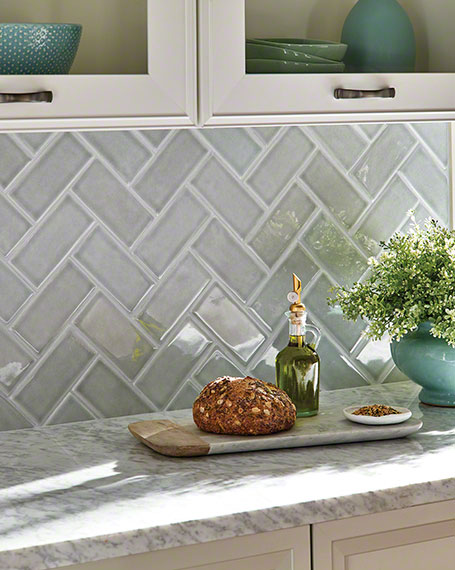
Tile backsplash design can also introduce a new pattern, such as brick, herringbone, checkerboard, or diamond. Mosaics can offer a modern metallic look or an Old World stone look depending on the kitchen’s theme – the options are endless for complementing your natural stone countertops and creating a mood with backsplash design.

Backsplash tiles also work well as a “statement wall”, such as a length of glass mosaics rising from the base of a sink all the way to the ceiling – a full expanse of color and light-capturing material that lends light and fun to the space. With so many mosaic tile options today, one can essentially create a permanent “wallpaper” –one that protects as well as enhances the value of the room.

Another design benefit of the backsplash is its positioning – backsplash tiles generally run the length of a countertop and under the cabinetry. Therefore, depending on the size and style of tiles selected, they can be used to lengthen the appearance of the countertop and draw the eye around the room, making it seem larger. Large or rectangular tiles (like subway tiles) are particularly suited to this purpose and give the illusion of more space. In addition, their positioning under the kitchen cabinets also invites the option of highlighting them more significantly with lighting. With strategically placed under-cabinet, recessed lighting, glass mosaics and metal mosaics can come to life, offering a different design aesthetic by day and night.

The kitchen backsplash may have begun as a functional element but it indeed evolved into an opportunity for design. Today’s backsplash is functional design, providing a protective barrier while also enhancing the look of the room with color, contrast, patterns, and interest. 

MS International offers hundreds of mosaic and natural stone tiles, borders, and trim for creating a striking display in your kitchen. If you’d like to envision backsplash tiles in your kitchen, check out our new Kitchen Visualizer and play with a variety of mosaic options.

Tags: , , , ,

Backsplash | Mosaics | Natural Stone | Tile

Statement Floors

by MSIBLOG 12. April 2013 13:37

Are you looking for a great way to update your bathroom, kitchen, or entryway? Other than the traditional diagonal pattern or brick jointed tile designs for your floors consider taking it up a notch by creating a statement floor.  Creating a unique floor pattern that defines a space can be dual purpose. It can simply create a focal point in the room or serve as a decorative detail that creates a zone in the room. Take a long galley style kitchen and break up the space with a rug pattern made from mosaic tiles in front of the sink. Or choose a bold pattern in classic black and white mosaic tiles to make an impact in your master bathroom.

With so many tile options available, coming up with a tile pattern that suits your style can be fun and it will really turn heads! Here are a few standout tiles that will make you dream home come to life:

After you have selected the color palette for your home project, think about how you would like the floor tile to be laid out. Tile can be a feature that can really changes the look and feel of the room. Don’t be afraid to get some graph paper and a ruler out to create a rough sketch of your floor plan. A tile contractor can help you get the exact dimensions, but be creative and treat your floor space as an integral part of the design in your room. Take a look at this tile medallion used to create a sitting area:


For those that are more adventurous, lets look at mixing patterns. The right mix of patterns can be key to the finishing touches of a perfectly designed room. Mixing patterns can be tricky, it’s a play on scale but color is also a factor. Take a bold black and white striped drapery and pair it with a smaller scale mosaic pattern like a herringbone or octagon. Your statment tile floor can be created as an accent detail that complements the textile patterns in your room or simply mimic an archtectrual detail like an archway. Geometric patterns like greek key, herringbone, and hexagon can be great shapes to introduce with the bold graphic textile patterns seen on drapery and rugs these days. The options are endless with glass mosaic tiles, beautiful stone and glass blended tiles, and natural stone tile mosaics.


Tags: ,

Ceramic Tile | Flooring | Limestone | Marble | Mosaics | Natural Stone | Porcelain | Tile | Travertine

Spring Toward Fresh Outdoor Design

by MSIBLOG 7. April 2013 11:30

Landscaping Projects with Natural Stone

In December, we wrote about warming up Magnificent Outdoor areas with natural stone. You may have tucked away some of our ideas for creating elegant outdoor living rooms, toasty fireplaces for gathering, and inviting natural stone kitchens until the new year. Spring is a great time to bring those designs back to the forefront and set an intention for incorporating stone into your natural landscape. We offer you the “three D’s” of outdoor design to help you focus on ways to enhance your landscape:

Designate areas for a purpose – The incorporation of functional areas into your natural landscape sympathetically, blending with the environment rather than competing with it, is an important philosophy as you move forward in any natural home design. Planning for a purpose is a great way to start. Are you creating a gathering area? Are you creating an outdoor living room or kitchen? The type of space you are designing for may very well determine which kinds of materials you select. For example, you may want to select stones that are easiest to sweep clean if you plan to walk barefoot on them to a swimming pool. Travertine pavers lie smoothly and evenly and suit this purpose well. More textured cuts may be your preference if your purpose is to highlight a feature such as a pond or water garden. Ledger stone and ledger panels work well as flat surfaces or are beautiful for vertical surfaces, like stacked retaining walls. 

Choose an area, designate it for a purpose, and then find the stone that best serves your needs in that space. 

Divide spaces – Landscaping stone is ideal for dividing spaces to create those “designated areas” without breaking up the flow of the property. In particular, selecting stones that are native to the area or are an extension of the home’s interior design will ensure that the integration is seamless and natural. Division of spaces also serves an important purpose – it not only makes areas for use more attractive, but cleverly disguises areas for non-use by children or guests. Low walls or benches invite sitting and enjoyment of the atmosphere; higher walls and columns around more practical spots like the garden shed or compost area remain accessible to the owner but inconspicuous to others. The use of finishing elements like pool copings and caps will give an overall polished, fully developed appearance as well and further define spaces.
 
Use natural stone to refine an area and guide the eye toward the places you want to enjoy most.

Direct foot traffic – Thoughtful use of travertine pavers, cobbles, or flagstones will not only divide spaces but will naturally guide traffic on the path of your choice. Whether your aim is to provide access to the farthest reaches of your vegetable garden, steer foot traffic around delicate flower beds, or offer a distinctive walkway for entering the home or garage, natural stones will make the necessity for marked paths appear decorative. 

Spring is the perfect time of year to carve some space for stone walkways –to finalize the overall design and function of your designated living space or to further divide spaces and guide traffic where you want it to go.

MSI has put together one of the largest collections of imported natural stone hardscaping products in the United States. These products which include pavers, caps, treads, copings, flagstone, ledger stone, and other accessories made from sandstone, slate, granite, and travertine are stocked in our warehouses across the nation. Whether you need to match a stone or hunt for something special, MSI is the best source for imported natural stone products.  

Matching Countertops; Cabinets; Floors

by MSIBLOG 1. April 2013 16:30

Tips for Maximizing the Benefits of the Kitchen Visualizer

MSI’s Kitchen Visualizer is an excellent tool for novice designers looking to find harmony among the basic material selections for the kitchen: countertops, cabinets, floors, and mosaics.  However, one could spend hours playing with the myriad options available in the Kitchen Visualizer – when a more strategic use can produce the best results.

It may be tempting to click away on the Kitchen Visualizer, randomly pairing beautiful materials in an instant. Nonetheless, when every variable is changed each time you try a design, it becomes very difficult to settle on any one design or make a decision. That’s where a little design know-how can help to bring a cohesive theme into focus. 

First, start with one element. Many designers start with the cabinets when styling a kitchen and work around them – for two specific reasons. One, cabinets will arguably be your most expensive, permanent investment. You may change the theme or motif of the room over time, but in general, cabinets will not be replaced until they need it. Two, design is all about contrast, so making that all important decision – dark or light with cabinetry – will then guide the direction for the rest of the kitchen.


Initially, you should decide if you like light or dark cabinets. Currently, the trend is dark cabinets with lighter countertops for contrast. This is a particularly practical trend because dark color cabinets will hide drips and splashes between cleanings, and countertops, which get cleaned more frequently, will highlight drips and splashes for quick, sanitary cleanup. Additionally, light countertops tend to show off colorful foods to their best advantage. Whichever you decide, light or dark, keep in mind that this will be one of your two dominant colors. In design, the formula is typically to select two dominants and one accent. As a dominant color, it’s usually best to keep it simple with a basic color and save the attitude for the accent. 

KITCHEN VISUALIZER TIP: The Kitchen Visualizer offers darker cabinet colors in Cherry and Coffee, a mid-option of Honey, and Maple and White for lighter cabinet options. If you have a non-traditional cabinet in mind, such as stainless steel, select White in place of stainless, as it most closely replicates the brightness in the room. Likewise, if you are looking at a bolder, non-traditional color for your cabinets, like a vibrant blue acrylic, choose Coffee – though it will not be the same color as your blue cabinet, the goal should be to replicate how the cabinet will affect the size of the room. 

Next, move on to the flooring. Your instinct may be to move right to the countertops to get that contemporary contrast you desire, but flooring is more likely your next dominant color. It should contrast with the cabinets, but complement them at the same time. Keep in mind that if the cabinets and the floor tile are too close in color, the look will be overwhelming, with too much of the same material in one area. If your floors will be wood, such as durable porcelain wood tiles, be sure that your cabinet wood and floor wood are of the same tone, though not of the same color. 

KITCHEN VISUALIZER TIP: The Kitchen Visualizer currently offers 6 options for floors. As you make your selections, it will help to consider what color will contrast nicely with the cabinets but will also be the best fit for your lifestyle. Alternate between cabinets and floors until you find a desirable and practical framework for your kitchen. 


When you have settled on the best cabinets and floors for your kitchen, move on to countertop selection. Countertops should not exactly match the floor at risk of appearing too busy, but should be similar enough so that the horizontal lines of the kitchen will feel in harmony; the rising vertical expanse of cabinets will provide contrast. Once you’ve settled on a countertop that works with the floors, then look at them in relation to the cabinets. Again, the contemporary trend is light countertops against dark cabinets – but light cabinets and dark countertops remains a timeless look as well. 

KITCHEN VISUALIZER TIP: Ubatuba granite and Black Galaxy granite are two popular dark countertop selections. If you are looking for a dark countertop contrast to light cabinets, consider starting with one of those dark neutral selections in the Kitchen Visualizer and move to more colorful tones as desired. Colonial Cream granite, White Ice granite, and Crema Caramel granite, in contrast, are some of the popular light countertop selections. Start with these and then warm up or down as needed. As countertops are often the most likely candidate for replacement to update the look of the kitchen, you may be doing a remodel of countertops only. If so, select the cabinets and floors closest in color and style to what you currently have and enjoy playing with the Kitchen Visualizer.

Keeping cabinets, floors, and countertops simple allows you to change your kitchen’s theme more often by tweaking the accent color. The best way to accent is with mosaic wall tiles, as they add both color and practicality as a backsplash, followed by accessories like window coverings and small appliances. (If you choose not to use a wall tile in your kitchen, consider the countertop as your accent against the two dominants of cabinet and floor.) Here bold colors against your more simple choices in cabinets, floor, and countertops will work wonders for giving the room personality. Mosaics are also a great opportunity for showing off countertops, so pick a color or tone within the countertop and exploit it in your backsplash tile for both interest and continuity.

KITCHEN VISUALIZER TIP: Remember that your mosaic tile will be your accent, your attitude, so don’t be afraid of a statement wall that stands out. Going too neutral here can have the result of looking like more of the same. If you don’t see a mosaic tile in the Kitchen Visualizer that speaks to you, MSI offers an expansive wall tile and mosaics collection. Be sure to investigate all your options by fully exploring our website. We offer glass, porcelain, stone, metal mosaics and combinations of all material types.


Matching your cabinets, floors, countertops, and mosaics isn’t all about coordination and contrast. It also involves matching materials to your lifestyle and overall theme of your home. We hope these tips will help you to utilize the valuable Kitchen Visualizer tool quickly, to lessen the amount of time you spend considering your design and move you forward to the fun part – implementation of your beautiful new kitchen!

Up Down and All Around: Functional, Decorative Tiles

by MSIBLOG 25. March 2013 09:07

Every once and a while, leaders in design turn things upside down and all around. What was in for decades is now out. What was out for decades is now in. This holds true even when it comes to simple things we thought we knew, like wall tile. This is certainly true today, as design trends are continuing to move toward a more generous and creative use of tile. For those with new constructions or on the cusp of a remodel, you’ll find what was the norm when it came to tile is now the exception.


Bathroom Applications

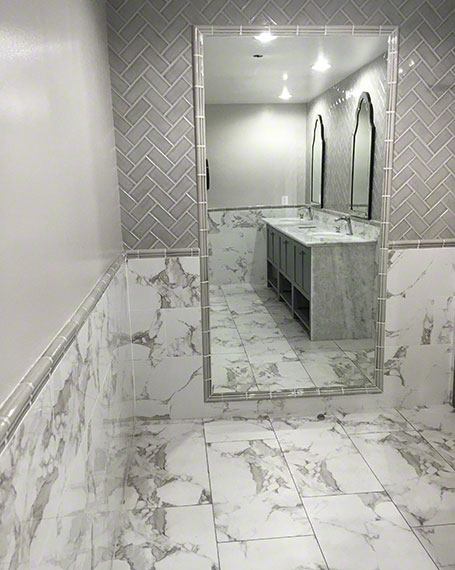
Wall tile is a bathroom staple, as tiles are easy to clean and they repel mold and mildew common to high moisture areas. Trends in the past few decades have leaned toward a more functional use of tile on the floor and on the walls. Whether they be glass or ceramic tile, the use of wall tiles generally ended at mid-height on the walls, allowing for paint or wallpaper to add a touch of color or contrast in texture. These days, more and more designers are calling for tile use from the floor to the ceiling, or even beyond to across the ceiling itself. This use of tile is certainly functional, as it closes any gaps between a mid-height tile border and the unprotected plaster or drywall (basically eliminating a space where water can creep in or dust can collect), is easier to clean overall, and can hide old stains and cracks. 

However, it is also a stylish decision. A bathroom is often a small space for good execution of creative decor, so pops of color or interesting mosaics on the ceiling are a clever way to introduce more color and interest to the environment. Rather than the tile/smooth wall contrast of old, now the focus is on unbroken lines of tile that make the room feel larger and draw the eye upward, a contrast in texture coming instead from a mosaic design or interesting tile pattern above.
 

Kitchen Applications 

Behind a hood, over a window, or even on all the walls, many of today’s kitchens are going “bathroom style” with generous use of backsplash tile. Both decorative and indestructible, as tiles will not need to be repainted or repapered like other wall coverings, they withstand the steamy conditions of a kitchen and are easy to wipe clean. Thematically, tiles can be used to create a mood or carry through a motif begun with the cabinetry, countertops, or floors. For example, arranged in a bricklike pattern, tiles that cover an entire wall (not just a backsplash) can call to mind an Old World kitchen. 

The use of mosaics or creative borders are an excellent way to feature a unique tile or pattern where we spend so much of our time on a daily basis. Statement floors and creative tile mosaics are wonderful touches for entry ways, but these are areas of the home where we don’t spend much time. True, they warmly great visitors and lure them in, but what about a gorgeous, eat-in kitchen where guests will be tempted to gather and graze – where they are more likely to spend time admiring the decor? The kitchen is the perfect place to decorate with functional color and design, and as the most commonly remodeled room in the home, it’s likely you’ll have the opportunity to experiment with interesting mosaic tile displays more than once over the years. 

There are many places in the home to explore new ways to use tile. Tile skirting, rather than wood baseboards, are another example of ways to enjoy the benefits of moisture resistant tile while keeping a modern edge. They also add textural interest to any space. Whether you’re looking to update a bathroom, kitchen, or other room, keep in mind that they are no longer any rules when it comes to tile application!

Tags: , , , ,

Backsplash | Mosaics | Tile

Envision Your Kitchen with the Kitchen Visualizer

by MSIBLOG 18. March 2013 09:17

As the leader in premium surfaces for nearly forty years, MSI offers thousands of materials for countertops, flooring, and wall cladding. Given our extensive selection, is quite a challenge to imagine all the beautiful combinations possible in the mind’s eye alone. MSI is therefore thrilled to announce the launch of the perfect companion to your imagination – the Kitchen Visualizer.

With the Kitchen Visualizer, the user can envision MSI products in different kitchen settings with one quick and easy to use application. This helpful tool mixes and matches cabinet colors with a variety of countertop, floor tile and backsplash tile options. Here are just a few reasons to use the Kitchen Visualizer for a kitchen build or remodel:

The Kitchen Visualizer puts the customer in the driver’s seat. Designers by their very nature can take a mental picture of a wide variety of design components in play at once, yet translating that vision to others can be difficult with swatches, tile samples, and sketches. The Kitchen Visualizer is an excellent companion for the designer who wants to help a client to see their material selections in action. Beyond the kitchen, the Kitchen Visualizer can also demonstrate what works – bathrooms, wet bars, and conference rooms call for similar applications of countertops and wall tile. Designs in the Kitchen Visualizer can easily expand to encompass other areas of the home or office. Clients can play with a wide variety of options to also better contribute to the conversation or vocalize their desires.

The limitations of the Kitchen Visualizer help one to look beyond the basics. The Kitchen Visualizer allows one to manipulate the cabinet colors, countertop, floor tile, and backsplash selections. However, it also expands the imagination to consider other choices that will need to be made in a redesign or build, beyond MSI’s product lines. For example, when selecting MSI tiles for the backsplash and floor, a client might realize that the natural stone materials he enjoys would be better offset by black appliances, rather than stainless, or perhaps by a different color wall. While he cannot change the appliances or wall paint in the tool, the Kitchen Visualizer helps the client to take the entire room into consideration, beyond the flooring, countertops, and mosaic tile options available at MSI, to make the best choices for the project as a whole, and create a full plan for a remodel or build.

The Kitchen Visualizer tames the imagination. When it comes to design, some might say that the sky is the limit. However, selecting components without considering them as a whole can lead to busy, over-designed spaces. The sky may be the only limitation when it comes to the myriad combinations available, but the Kitchen Visualizer will prevent clients from picking too many things they love that cannot exist in harmony. 

 At the same time, the Kitchen Visualizer also expands the imagination. As easy as it is to let a “sky’s the limit” mentality overtake a designer, so too is it possible to limit the imagination for the fear of doing too much. Many clients are afraid to mix and match patterns and colors, knowing how easy it is to do too much and let the theme get away from them. The Kitchen Visualizer takes the guess work out of it. With neutral wall colors and appliances to complement every selection, and two room structure options, the Kitchen Visualizer allow clients, or their designers, to envision everything MSI has to offer – Who knew this would look so good together? I never thought of making a statement with that…

Let the Kitchen Visualizer take the guesswork out of design and use it to create the kitchen of your dreams. With easy clicks, no lengthy uploads, and instantaneous results, the Kitchen Visualizer is an exceptional tool that allows you to save, print, and email any design you create for future use. 

We encourage you to take your time to explore the many combinations possible - and to visit the Kitchen Visualizer often, as it is updated weekly with new colors and products!

Marble Countertops for High Traffic Areas

by MSIBLOG 11. March 2013 11:21

White marble is undeniably one of the most recognizable and elegant natural stones available for countertops today.  Marble stone buyers are typically drawn to the high end, discerning look that is a marble countertop, valuing its smooth, clean look for a bathroom vanity, wet bar, or kitchen countertop.  A white marble slab over deep dark wooden cabinets is an Old World look that began with the kitchens and coffee houses of Italy.  It was made even more popular in the U.S. by Martha Stewart centuries later, when she invited viewers into her home to see her work dough and pastries on cool, white cararra countertops. The fresh look of white marble accentuated by a vase of colorful purple peonies, a basket of brown eggs, or a bowl of colorful fruit inspired an explosion of photo shoots and a burning desire by homeowners to mimic Martha’s style in their own homes.

The look of marble slabs, with their striking veins against gorgeous white backdrops, are one reason why people want it. It is the epitome of luxury, for those wanting ‘the best’, and yet it is surprisingly one of the most affordable natural stones, another reason people want it. So why doesn’t everyone have marble countertops in their bathrooms and kitchens?

Marble is known to be a more porous, softer stone than some of its natural stone counterparts. Its nature lends itself to staining and etching more easily. Some buyers are undaunted by the possibilities of chips or stains, however, as they feel the patina adds to the character of their kitchen or enjoy the process of ageing natural materials. Others, however, desire a more modern design aesthetic that necessitates a less “lived in” look for their countertops. With proper choices, care and maintenance, marble countertops can certainly satisfy this second group.

Before we discuss a few tips to keeping marble countertops looking new, we offer a clarification on the term “etching”. Permanent etching would be the result, for example, of placing an acidic lemon face down on a marble surface for a period of time. When removed, the result would be a clear mark that is less shiny than the rest of the surface, likely permanent. Temporary etching would be more like what happens when the stone gets wet from water. The affected portion would appear darker until the water soaks in or dries, with no lasting change to the stone itself (common to many natural stones that are not sealed). For the purposes of the tips below, we’re referring to permanent etching, a result acceptable to those embracing an Old World patina and a result less desirable to those with a modern look in mind.

- Honed marble countertops are a usually a better choice than highly polished marble slabs if the look of etching is not desirable. Permanent etching is less noticeable on a more matte surface.

- All spilled liquids and spices should be wiped immediately from the surface. Red or purple liquids will stain more obviously and should be taken care of with greater urgency. Red wine, beets, turmeric, mustard, oil, and blood are examples of items that should not be allowed to sit on marble.

- New marble buyers are encouraged to retain an unused piece of their marble to test its limits. Leftover pieces from the install, such as remnants from cutting the holes for sinks and faucets, are ideal for this purpose. Use them to experiment with liquids, spices, and knives to get a sense of what your particular countertop can endure. Knowing a red wine drip needs to be swiped up within 5 minutes but a few drops of beef broth can sit for hours on a particular marble is invaluable information down the road to owners who wish to delay ageing.

- There are products designed for polishing marble countertops. Stains can often be removed with these polishes. Keep them handy for spot removal, as the quicker a polish is used, the more likely it will combat staining. Over time, some stains will also fade on their own or become lighter and less noticeable.

- It is true that marble is a “softer” stone. However, it is still stone. It can usually endure more than owners think. Take care in high traffic areas, such as around the sink or landing spots for pots and pans, but keep in mind that the softness of the stone does have an advantage. Marble can be re-honed or polished to treat etching, scratches or stains. Harder surfaces do not offer this option.

- The key to keeping marble looking beautiful is to seal it. Though it can be professionally done, sealing is an easy do-it-yourself project with a wipe-on sealant. Well-sealed marble will ensure liquids bead on the countertop and do not sink in. How often sealing is needed will vary depending on the type of sealant used in the past. When water does not bead on the surface, it is a good indicator that it is time to reseal.

Marble countertops are classic. Timeless. They offer a bright, stunning white unrivaled by other natural stones. Best of all, marbles come in a variety of colors from Carrara White marble to the darkest China Black, and are elegant, affordable options for natural stone lovers. Whether a buyer desires an aged look, etches and all, or a sleeker surface, marble can meet the needs of most, even in high traffic areas.

MSI is the leading importer and distributor of countertop products in North America, offering more than 50 marble color options and patterns to choose from. For more about marble and marble care, click here for a download of “Care and Cleaning of Natural Stone”, or visit The Marble Institute of America or The Natural Stone Institute on the web.

5 Reasons to Make a Statement with Floors

by MSIBLOG 4. March 2013 08:49

Statement Floors are a great way to feature a special tile or other flooring material – from mosaics to porcelain wood tile, any room in a home (or office) can be amplified by flourishes that enrich the overall design.

Not every floor is a statement floor. A statement floor, by definition, is one that says something to the viewer. The true meaning of the terms is this: a statement floor is unique from the everyday floor. It is the visual expression of the unexpected, a non-traditional placement of material that catches the eye and elevates it beyond what is necessary for a stylish or functional floor.

There are many statements to be made with a statement floor, but we offer 5 reasons to consider one for your next project:

1. A statement floor is a permanent piece of artwork. Whether it is the arrangement of tile on a bathroom floor to look like an antique rug or the use of mosaics to create a garden of flowers in the mud room, unusual tilework can be a talking piece just like a piece of art on the wall – a frame that will never tilt out of place, a picture that will never fade. For those who love to surround themselves with the finer things, an artistic floor creation is the perfect way to translate the love of art into home design.

2. A statement floor will add character to a small bathroom. In a small space, it’s difficult to make a statement with wall color or decorative elements without giving it a cluttered feel. The addition of a statement floor means a small space can enjoy a clean feel with minimalist design on top and a creative touch on the bottom to keep it fun. Conversely, a statement floor can also expand a large bathroom – the arrangement of long vertical borders, for example, will make the space seem even larger, and thus, more indulgent.

3. A statement floor in the entry way is inviting to guests. While a solid wood floor with a brilliant shine is beautiful and eye catching even in simplicity, a more complex pattern can create a cozier feeling, especially in foyers and other entry ways that draw visitors in. A herringbone pattern of porcelain wood tile, for example, creates interest. Used sparingly as contrast with expanses of traditional lays, such a design element will stand out even more. Likewise, a herringbone or other design used generously in large, uncluttered spaces where the workmanship can standout also make a luxurious statement.

4. Statement floors say customization. Read, upgrade. For art lovers, statement floors are an extension of artistic design; but for others who also view their homes as a place of both enjoyment and equity, a statement floor says something bolder – investment. It also says things like “resale value” and “desirable”. Though such details are not always found in real estate ads, agents will tell you that the homes that go the extra mile to employ the finer touches will sell faster. For homeowners who choose the best upgrades or top-tier design elements to raise their homes to the highest level, the addition of complex mosaic tile schemes tastefully throughout the home will increase its value as a place to live until it is time to sell. 

5. A statement floor is a demonstration of traditional workmanship. If you’ve ever wondered why anyone would endure the inconveniences of a historical home, it is for the workmanship. I.e., the touches that were once standard in homes and are now considered unique to moderns constructions, like crown and chair moldings, archways, stained glass and muntin windows, and lead glass doors. Statement floors belong to this group as well, as they are also traditional to historical homes. They are achieved in intricate mosaic bathroom floors, Versailles pattern hearths, and checkerboard, brick, herringbone or other custom natural stone floor designs in kitchen and living areas.

Not every floor can be a statement floor. If every floor in a home makes a statement, it takes away from the surprise a truly creative floor can affect. Poor execution can be a cacophony of voices struggling to be heard. On the other hand, most homes can benefit from creative tile work in more than one room, particularly in homes where the rooms are structured as clearly defined spaces. An open floor plan, for instance, can appear confusing with statement floors in both the designed living and kitchen areas, whereas a closed floor plan with divided rooms can easily have their own voices.

For more on statement floors and unique tile choices, check out a few related blogs: Tile Floor Designs – Beautiful, Classic Patterns, The Redwood Series: Naturally Respectful Porcelain Wood Tiles, Botanica – Porcelain Tile with Exotic Wood Appearance, and In the World of Natural Stone, Rectangular Tiles Go to Great Lengths.

Tags: , , , ,

Ceramic Tile | Flooring | Mosaics | Natural Stone | Porcelain | Tile | Wood Tile

Month

Tag

RecentPosts