Vendor Login | Customer Login
 
 
houzz interior design ideas

MSI iPad App

ipad
Complete access to all MSI products at your fingertips!

MSI Video Corner


Romancing the Stone - Final Cut

by MSIBLOG 7. November 2012 00:29

Over the past weeks, we have taken you around the world to see natural stones as we see them – multigenerational, varied, and boundless. We discussed granite, marble, travertine, slate, limestone, and onyx, described how they are formed, and explored their many uses from national monuments, landmarks, and tourist destinations to every day products past and present. This week, in our final installment, we’d like to bring it altogether and offer you an overview of each stone to demonstrate how a premium surface from MSI can become a piece of art in your home or business. 

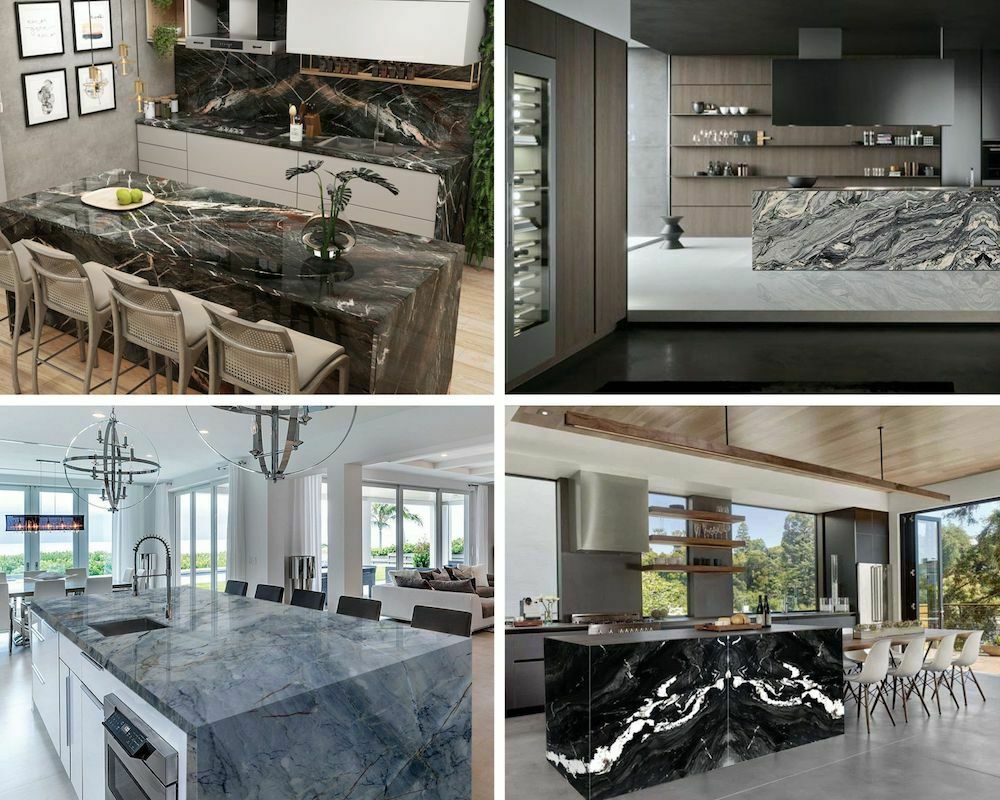
Granite – Easily the most well-known natural stone as a building material in today’s design lexicon, MSI offers a vast variety of granite countertops and granite tiles for flooring, as well as granite landscaping stones, like cobbles, for outdoor needs. Though it is the hardest of the natural stones and also known as the most “maintenance free”, making granite great for interior and exterior applications, this natural stone’s true virtue is its broad range of patterns, colors and crystalline variation, and versatility when it comes to cuts and finishes. As discussed in our tour of national monuments, granite is a popular choice for its ideal carving surface; however, it is also a perfect choice to bring a little majesty to your next project.

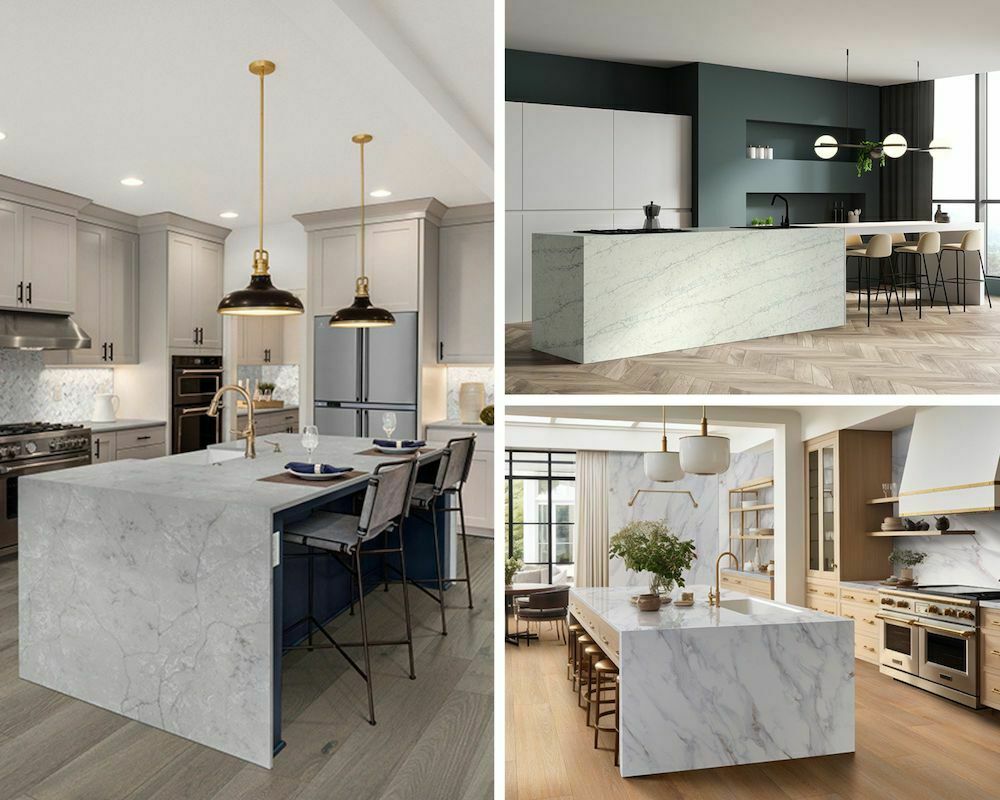
Marble – Your home may not be the Taj Mahal, but it can feel like it with a selection of marble tiles for flooring or marble slabs for countertops. Marble’s distinctive veining that can reveal itself as bands, streaks and clouds and variance in white, black, grayish and even pink and red shades makes it a great natural stone for accenting an area like a foyer, fireplace, or special countertop. As a piece of marble can be more susceptible to etching depending on its mineral content than an invulnerable stone like granite, it is best utilized selectively as a piece of definitive artwork for minimalist or dramatic looks.

Travertine - Travertine exemplifies the uniqueness of natural stone and offers us breathtaking achievements, whether untouched in its native environment or realized as man-made structures. Travertine tiles are one of the most popular natural stones for both interior floors and for exterior floors as travertine pavers. Travertine caps, treads, copings, flagstone, and ledgerstone will also redefine the look of an outdoor paradise. Travertine just as easily stands alone as it works in partnership, as travertine can be combined with other stones, metals, or glass into stunning mosaics that emphasize the whites, creams, browns, coppers, and pinks of this unique stone. It’s truly a wonderful combination of strength, like granite, and beauty, like a traditional marble, escalating the quality of design.


Slate – In our Romancing the Stone blog about slate, we celebrated its many merits – flat and smooth, thermally stable, fireproof, resistant to water, and more.  However, slate is more than just a adaptable stone we’ve been using since 6000BC. It is arguably one of the most distinctive and attractive of the natural stones. Light to dark grey, black, green, pink or red, purple, brown, blue-grey, or mottled, slate boasts a vibrant array of color and exceptional texture. Slate is suited to indoor and outdoor use. We offer slate tiles for flooring, mosaics for wall cladding, and slate pavers and landscaping stones for colorful patterns. It can bring an “old-timey” look to a room or modern sophistication, and the fact that no two pieces of slate, even from the same quarry, look alike means that a focal point of slate can be a piece of unrivaled art in itself. 


Limestone – It’s hard to imagine that a stone with so many practical and industrial purposes, such as for an additive in paint or filler in toothpastes and antacids, can also be something beautiful to look at. Nonetheless, the muted tones of limestone are perfect for a casual design aesthetic, and the very nature of stone itself implies wealth and prosperity despite the comfortable look. MSI offers limestone for a variety of applications – limestone tiles for flooring in low traffic areas; limestone slabs for countertops; limestone mosaics and beveled tiles for bathroom and fireplaces; and natural cut flagstones for your outdoor art gallery.


Onyx – This semi-precious stone is indeed the crowning jewel in a home or business application. As noted in our blog devoted to this natural stone, onyx is particularly suited for exotic countertops, like bartops, or for fireplace faces and backsplashes where the stone sees gentle use but is highly visible. Onyx tiles may be used for flooring, especially as edging and accents, and is also beautiful in combination with other stones, glass, or metal as eye-catching mosaics. Onyx may not be as versatile as the other natural stones we’ve discussed in this series (only in the sense that it cannot be downplayed and cannot help but uplift a room), but it certainly is the prime example for how a natural stone alone can be a piece of art. 


We hope you’ve enjoyed our Romancing the Stone series and invite you to take a look back at each of these natural stones, deeply rooted in tradition, generationally appealing, and variant in application. 


Romancing the Stone: Introducing MSI’s Natural Stone Series


Romancing the Stone: Monuments that Stand the Test of Time


Romancing the Stone: World’s Most Beautiful Travertine 


Romancing the Stone: No Boundaries in Quality


Romancing the Stone: Slate is a Timeless Stone


Romancing the Stone: The Many Faces of Natural Limestone


Romancing the Stone: Bring it Together Natural Stone Mosaics


Romancing the Stone: Onyx - Jewel of Ancient & Modern Design

Romancing the Stone - Onyx : The Jewel of Ancient and Modern Design

by MSIBLOG 2. November 2012 13:13

The  origin of onyx is rooted in ancient myth. Greeks and Romans believed that Cupid clipped Venus’ nails at the banks of the Indus river. The goddess’ nails fell to the water and floated to the bottom where they were transformed into onyx. In fact the word “onyx” means fingernail (or claw) in Greek. This may be a reference to its mythical origin or simply be an accurate description of the stone itself, as Onyx’s hallmark is its heavy mineral veining, drawn through the dark stone like fingernails.


Mythical reverence led onyx, particularly black onyx, to become a significant stone in ritual and shows of elegance throughout history. Its smooth texture is perfect for carving. As such, onyx was used thousands of years ago to make figurines of the gods and heroes and for ceremonies and burials. It was also used in combination with other stones to make bowls, cups, stamps and seals, jewelry, and precious inlays. In more recent history, black onyx rose to popularity in Victorian times for necklaces, rings, and earrings. This popularity is attributed to the Victorian ritual of mourning, in which those who had lost loved ones could only wear the color black. Black onyx was also linked to strength and positive spiritual effects for the wearer, something mourners wished to draw upon; indeed, onyx was worn in battle on shields, swords and armor because it was believed to strengthen and protect warriors. 


Today, we know much more about how onyx is formed. Like many natural stones, it is formed from layered deposits in warm springs and limestone caves. Over millions of years, fine calcite deposits build to create a smooth, translucent layer. Onyx is actually a form of marble, and as such, it is more fragile than other natural stones, like granite. That it is more susceptible to etching does not make it an underutilized stone, rather, it simply makes its uses more precious. Thoughtful application in modern design can make onyx a striking stone, particularly when we now know how beautiful this transparent stone is when backlit to showcase it – properly displayed under or over lit areas, one can appreciate the unique veining and the sometimes dozens of colors offered in one piece. 


Contemporary uses of onyx continue to follow tradition. Black onyx is still used in cameos to create contrast with white layers, and it is considered a masculine gemstone for rings (particularly in men’s class rings). As a decorative element, onyx is suited to low traffic areas in homes and businesses. Slabs are generally smaller than other stones, given that it is more difficult to extract in large blocks; however, MSI offers a wide selection of sizes and colors. Onyx is particularly suited for exotic countertops, like bartops, or for fireplace faces and backsplashes where the stone sees gentle use but is highly visible. Onyx tiles may even be used for flooring, especially as edging and accents.


Onyx is also commonly coupled with other stones and materials for added depth and contrast, particularly suited to backsplashes where decorative accents are in plain view of a high traffic area, but are not subjected to wear. Onyx mixed with travertine and onyx with glass are two such options. The added materials mean an even greater variety to satisfy a designer’s imagination. For example, the unique combination of red onyx with travertine achieves a colorful but subtle elegance, as well as earthy appeal. Similarly, the mix of Giallo Crystal Onyx, Ivory Travertine And Honey Onyx Caramel Glass and the Giallo Crystal Onyx And Ivory Travertine scheme both make bold statements in a understated way, perfect for the backsplash in an indoor or outdoor Tuscan inspired kitchen. The options are endless with the variant nature of onyx, alone or in combination – a stone ideal anywhere the design calls for a touch of precious elegance.


Stay tuned for the upcoming conclusion to the Romancing the Stone Series – a look back at all the beautiful stones we have covered in this series and the many options MSI Stone offers for each.

Tile Floor Design Ideas - Beautiful Classic Patterns

by MSIBLOG 17. September 2012 22:28

Natural stone has an innate beauty that few things on earth can rival. Nature and time combined with today’s technology has created an extensive and impressive variety from which to choose for your unique project.

A myriad of exquisite tones and textures can be found in tiles coming from Asia, Europe, North America and South America and have the beauty and the durability that is perfect for home flooring, restaurant flooring, and many other commercial applications. The exciting challenge will be choosing from the many wonderful options available.  Once you have found your unique stone or porcelain tile, you will want to select a pattern that will highlight and compliment rather than compete with the natural beauty of your stone.  It can be helpful to collaborate with a flooring company that is equipped to combine an exceptional product with expert guidance to help choose a pattern that pleases the eye and exceeds your expectations. Five of the more popular varieties are highlighted below.


1. The Grid or Straight Lay: This stone pattern is considered to be the most cost effective due to its simplicity and ease of installation. It usually employs square tiles that are laid in a uniform grid.  Care must be taken to ensure that the complicated grout lines of this pattern stay neat and thin so as not to become the focal point and overtake the beauty of the individual tiles.  You will find this pattern in many commercial applications such as restaurant flooring, walls and entries.


 2. Checkerboard Pattern: Like this pattern, the checkerboard is laid on a grid.  The difference is that two different tiles are used to create further interest.  Think along the lines of the traditional black and white checkerboard without letting your imagination stop there.  Two complimentary natural stone tiles of the same tonal quality laid in this manner can create a look that is subtle and exquisite.  Additionally, the pattern can either be set straight in conjunction with the room, or placed on a diagonal for additional character. 


3. Brick Pattern: The brick pattern has become a popular choice for both flooring and walls.  You can choose a single tile to use throughout, or incorporate a variety of complimentary tile selections to add unique borders and design highlights and create additional interest.  This distinctive pattern highlights beautiful stones and tiles by creating a more linear visual appearance.

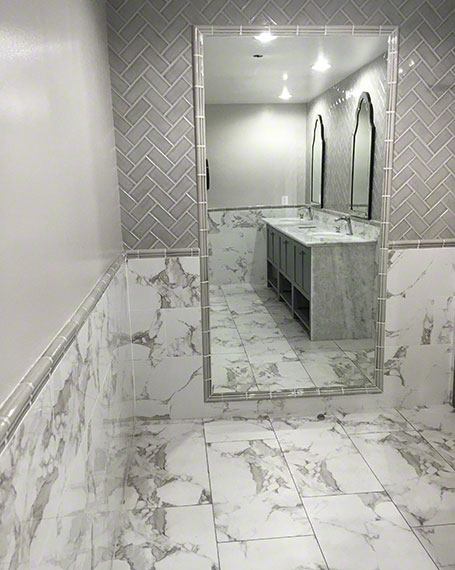
4. Herringbone Pattern: When used on the floor, the herringbone pattern creates a visual sensation of welcoming.  It can also help lengthen or widen a room depending on the direction it is laid.  It has it’s roots in France and Italy and can be found in grand estates, palaces and castles.  This pattern can be created using natural stone or wood tiles or by using a combination of mediums. Because of the complexity of this pattern, you will want to make sure to choose a professional who can properly calculate the exact tile requirements for the project. 


 5. Versailles Pattern: This intricate and distinctive pattern is from the fabulous Versailles Palace just outside of Paris.  It requires a variety of tile sizes and shapes and for the best appearance, a professional with experience in this exquisite pattern should be used.  Traditionally this pattern was used to create a homey rustic appearance using travertine and other rough textured stones.  However, the Versailles pattern looks extraordinarily modern and sleek when designed with today’s more contemporary tiles and stones.  This pattern is equally exquisite for both indoor and outdoor applications. While selecting the tile and stone to use for your project, always keep your pattern design in mind.  Choose one that you like that compliments and highlights the innate beauty of the tiles.  Pull inspiration from traditional patterns and then update them by adding your own personal flare.  Residential, restaurant flooring and other commercial flooring applications can all benefit from a bit of character with these timeless designs.  

In the World of Natural Stone, Rectangular Tiles Go to Great Lengths

by MSIBLOG 20. June 2012 10:03
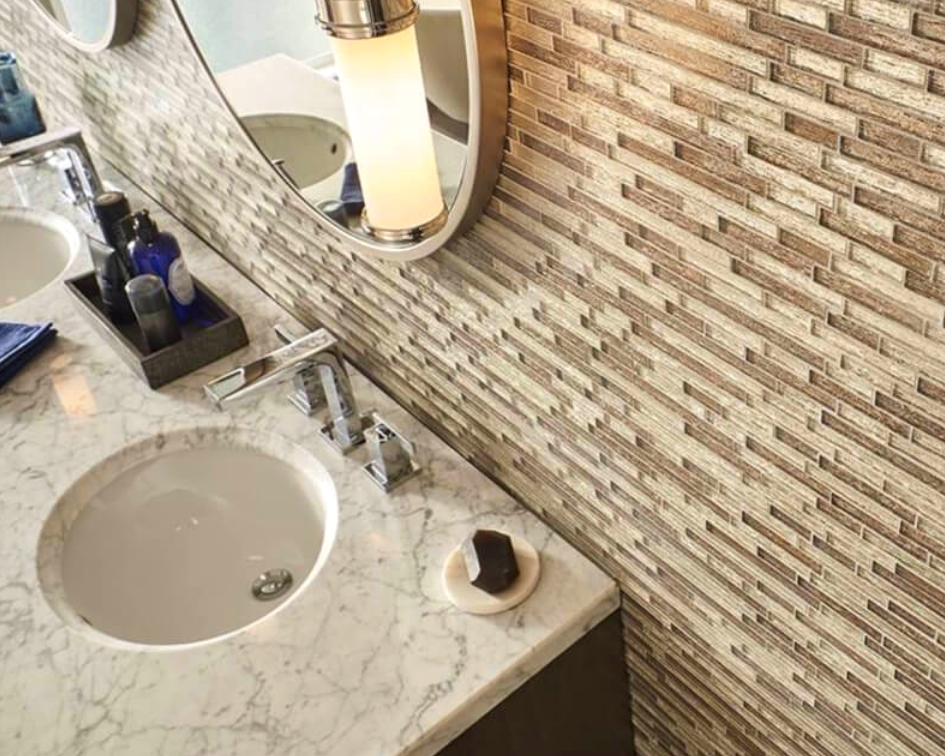
In the world of natural stone, tile it will always be ‘hip to be square;’ however, it seems that today’s design showrooms are currently needing to make a bit more room among their displays for its leaner cousin, the rectangle. These linear pieces have actually been around for a while in the form of the ever popular subway tile. While these are still being used in the classic sense in homes around the globe, those who want to step outside the norm are now reinventing the rectangle by playing with various other combinations of materials, sizes, patterns and directions, creating a whole new generation of design possibilities.
 

More Than Meets the Eye
There is no set rule when it comes to matching tile size with the size of the room. With the right design in place, both big and small tiles can complement most any style. However, the use of rectangles can assist in visually altering the feel of a room due to their natural ability to “lead the eye.” Cleverly laid tiles can actually create the perception that a space is longer or taller, larger or smaller. Is there an area that appears cramped? Laying long, rectangular tiles will miraculously seem to open up the area. Place rectangular tiles vertically and a wall will instantly appear taller. The increasingly popular large format rectangular tiles will make a space seem more open while small tiles create a sense of intimacy. A current design trend is to strategically combine different sizes and shapes within a similar color scheme for a visual treat. 
 
Vertical: The New Horizontal
Whether or not you need to heighten a room, staggering tiles vertically are trending. For those who lean away from the traditional and more toward the cutting edge, interior designers are obliging by combining random materials, colors and sizes in a decidedly vertical pattern - even varying the depths of tiles rather than setting them flush, creating a dramatic “waterfall” effect.
 
Pattern Possibilities
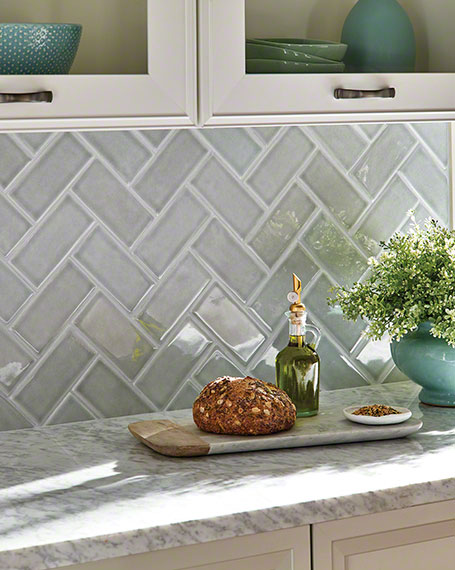
There are endless designs that can be created with rectangular tiles.  Some of the more popular patterns found in design literature include “Brickwork,” “Basket Weave,” and “Herringbone.” You can create further interest by incorporating square tiles into these designs, following such patterns as” Alternating Brickwork” or the “Windmill.”  These popular templates can be used as a guide to get you started as you consider and plan your own unique vision for the room.   


MSI’s website makes it easy to choose the perfect tile for your project. Their “Rectangular Field Tile Collectionoffers over 25 central colors within a meticulously chosen mix of natural stone materials such as natural Limestone, Travertine, Marble, Porcelain, and Slate. With the many sizes, textures and finishes readily available, you can turn just about any design idea you can dream up into a reality.


Month

Tag

RecentPosts